The pharmacological targets through which this compound exerts its effects.
Living organisms in which this compound is naturally found.
- Cicero 2009
- Imenshahidi 2019
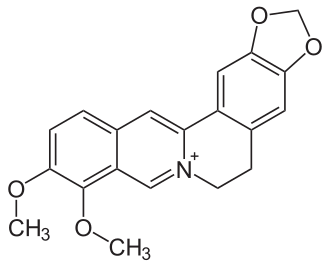
Isoquinoline alkaloid widespread in Berberis, Hydrastis, Argemone, Coptis and many other genera. Not classically psychoactive — included for completeness as a major alkaloid of several plants in the atlas. Active research target for metabolic and cardiovascular conditions.
Atoms positioned in their lowest-energy 3D geometry, sourced from PubChem. Drag to rotate · scroll to zoom · switch between stick, sphere, and line representations to feel the shape from different angles.
The pharmacological targets through which this compound exerts its effects.
Living organisms in which this compound is naturally found.

Pyridine alkaloid acting as a partial muscarinic acetylcholine receptor agonist. The primary psychoactive constituent of betel/areca nut, producing mild stimulation, warmth, and a sense of well-being alongside well-documented carcinogenic risk to oral tissues with chronic use.

Phenylpropanoid found in Acorus calamus and Asarum species. Mechanism remains incompletely understood; mild psychoactive, sedative, and tonic effects have been described historically. β-asarone, a related isomer, is classified as a probable carcinogen and is the reason calamus from Indian-strain plants is regulated as a food additive.

The most widely consumed psychoactive substance on Earth. Acts primarily as a competitive antagonist of adenosine receptors, indirectly raising dopamine, norepinephrine, and acetylcholine signaling — producing wakefulness, alertness, and mild euphoria.

Heptapeptide originally isolated from the skin of Phyllomedusa frogs, acting as a highly selective μ-opioid receptor agonist roughly 30–40× more potent than morphine. The active principle (alongside deltorphins, phyllocaerulein, and sauvagine) in the kambo secretion used by several Amazonian peoples.