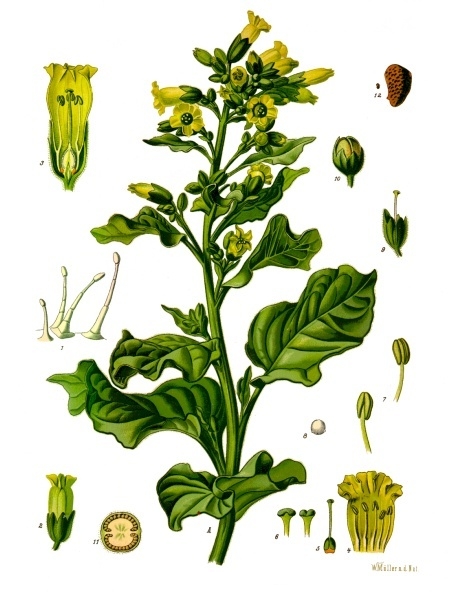
The original tobacco species of the Americas — vastly more potent than the commercial Nicotiana tabacum, with nicotine content often exceeding 9% by dry weight. Central to many indigenous shamanic practices throughout the Americas.
Hardy annual, originally domesticated in the Americas; tolerant of poor soils and cool climates.
The names this organism has been given by the cultures that have lived alongside it. Each carries an entire relationship — what is sacred is never simply translated.
- MapachoQuechua · Amazonian curanderos
- PetunTupi–Guaraní · Tupi peoples
- The most widely used sacred plant in the Americas — smoked, snuffed, drunk, and ingested ceremonially by hundreds of indigenous cultures. Considered the primary plant ally by many Amazonian shamans, often spoken of as more important than ayahuasca.
The shamanic relationship to tobacco is profoundly different from the consumer-product relationship most modern people have. In ceremonial use mapacho is treated as a teacher and a protector — the smoke is considered a vehicle for prayer.
- Wilbert 1987
- Russell 2009


