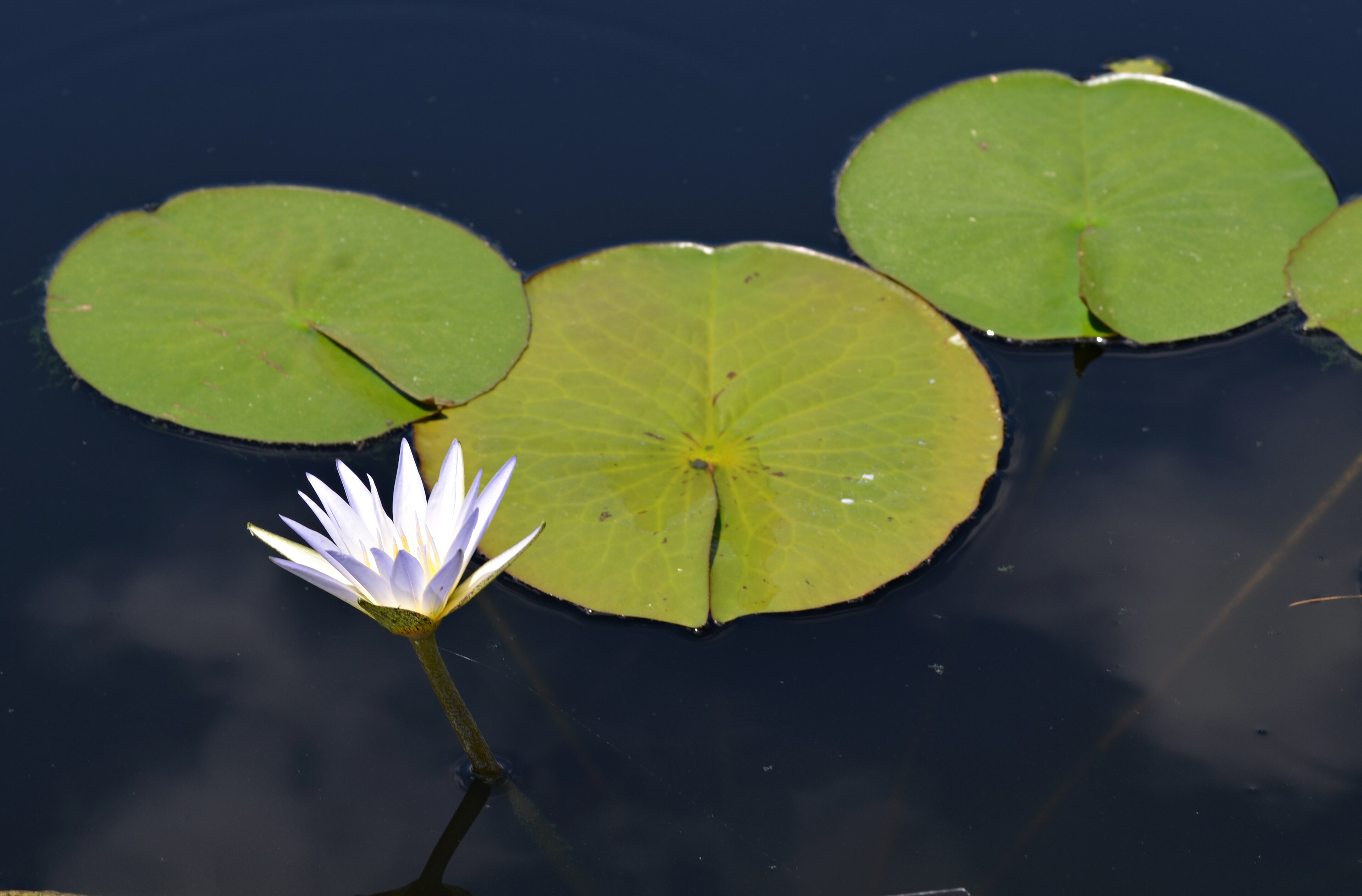
Slender blue-petalled water lily of the Nile and tropical Africa whose flowers contain nuciferine and apomorphine — mild sedative, mood-lifting, and dream-enhancing alkaloids — and which is depicted constantly in ancient Egyptian art beside scenes of feasting and ritual.
Floating-leaved aquatic perennial of slow rivers and shallow lakes in Egypt, the Sudan, and east Africa.
The names this organism has been given by the cultures that have lived alongside it. Each carries an entire relationship — what is sacred is never simply translated.
- Seshen (𓆸)Ancient Egyptian · Ancient Egyptian
- Constant motif in ancient Egyptian funerary and feasting art, sometimes shown being soaked in wine
- Folk use as a mild relaxant and aphrodisiac
Strictly speaking technically not a true lotus (which is Nelumbo) but a water lily. Its modern reputation likely overstates its psychoactivity, but its ritual centrality to Egyptian culture is undeniable.
- Emboden 1989
- Bertol et al. 2004 DOI


