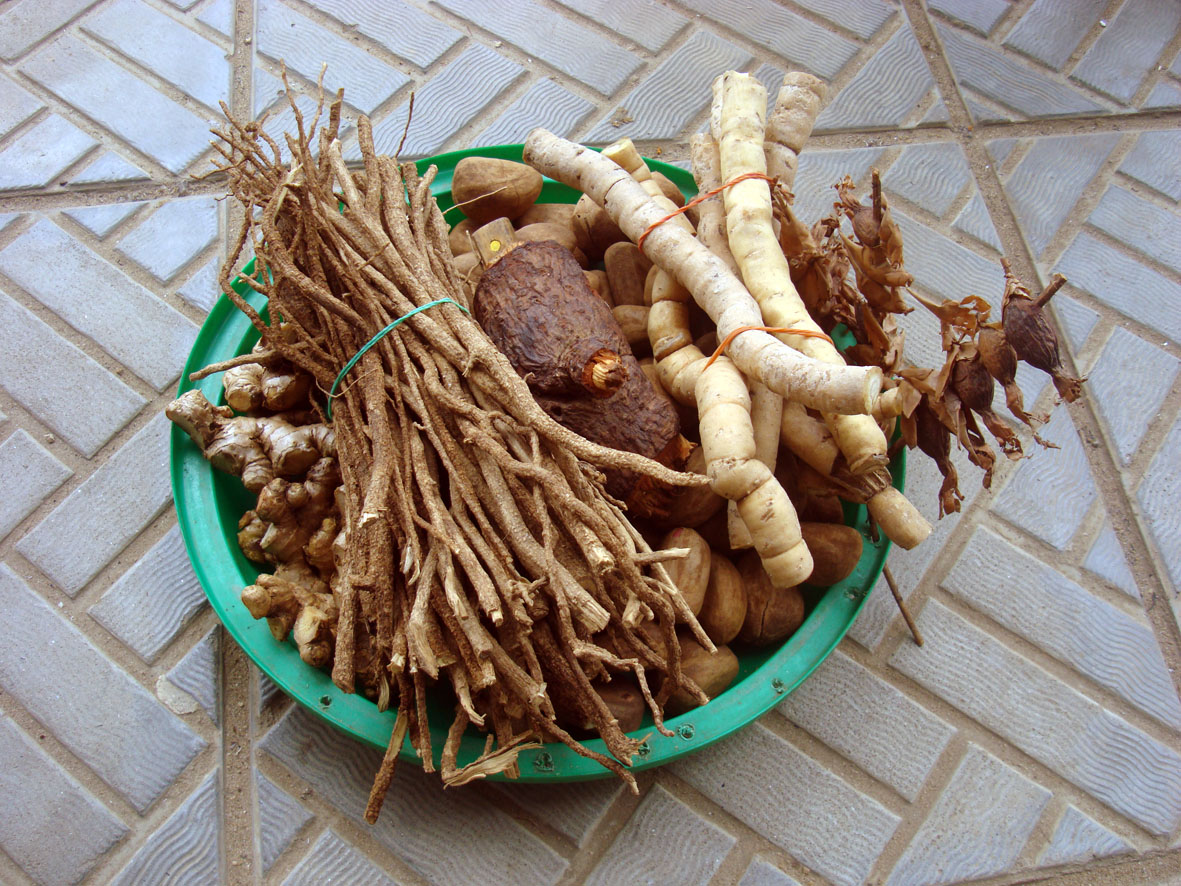
Evergreen tree of West and Central African rainforests whose inner bark contains the indole alkaloid yohimbine. Brought into Western use in the late 19th century as an aphrodisiac, and now also sold over-the-counter for athletic performance. The clinical profile includes meaningful α2-adrenergic effects and interaction risks that justify caution.
ECOLOGY & HABITAT
Lower-canopy tree of moist West and Central African lowland forest. Slow growing; wild populations have been over-harvested across most of the species' range, prompting CITES discussion.
Distribution
CameroonGabonRepublic of the CongoEquatorial GuineaNigeria
TRADITIONAL USE
- West African ethnobotany — bark decoction taken as an aphrodisiac and tonic
- Bantu ceremonial preparations in parts of Gabon
REFERENCES
Toggle scholarly mode in the footer for inline DOI links
- Tam 2001
- Sunderland 2003


