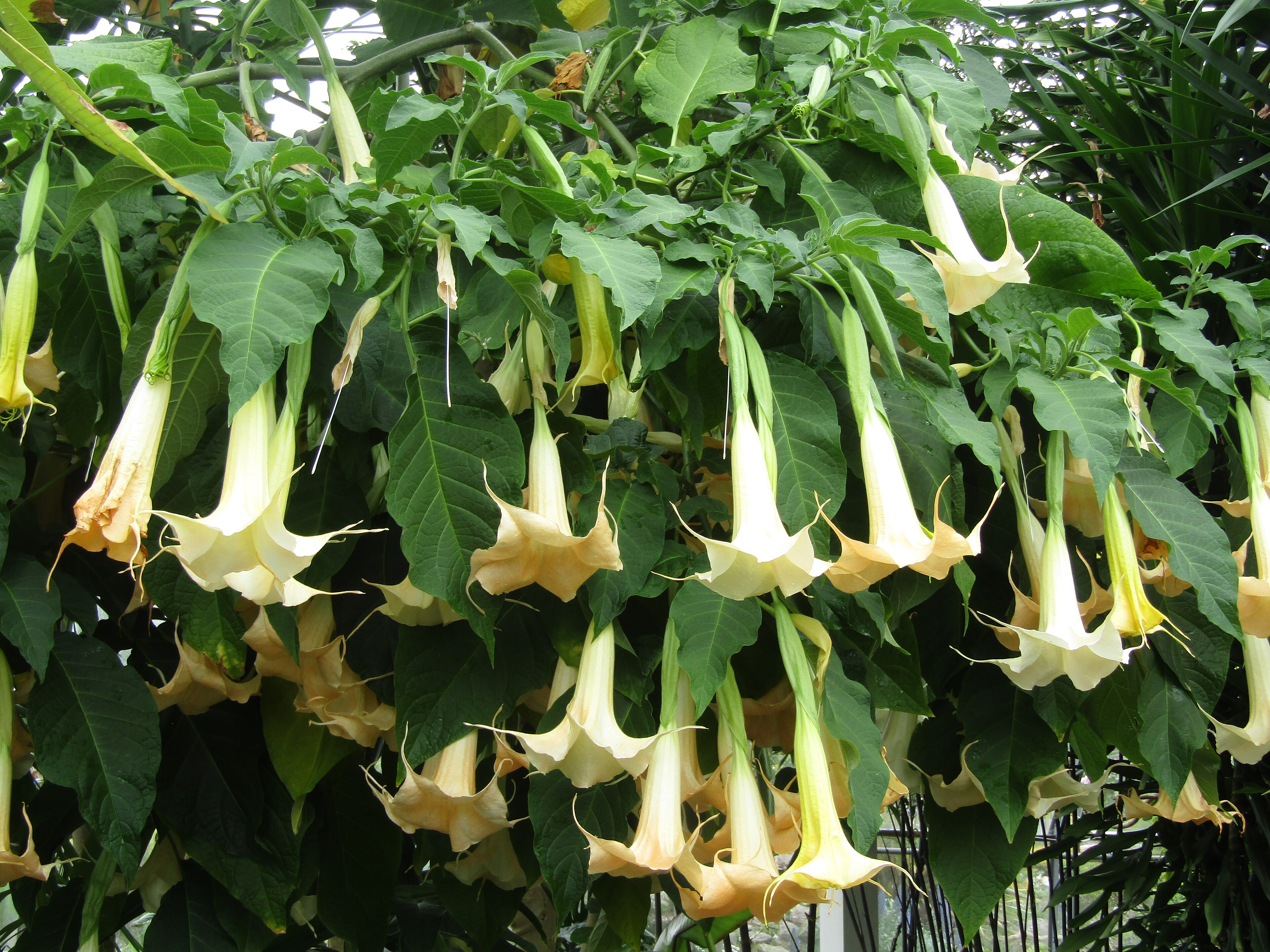
Tree with enormous fragrant pendulous flowers, containing the tropane alkaloids scopolamine, atropine, and hyoscyamine. Produces a deeply deliriant, dissociative state that many traditional practitioners describe as fundamentally different from — and more dangerous than — the tryptamine entheogens.
Cultivated tree, no longer found in the wild. Native to South America; widely grown ornamentally across the tropics.
The names this organism has been given by the cultures that have lived alongside it. Each carries an entire relationship — what is sacred is never simply translated.
- ToéQuechua · Amazonian
- MaikoaShuar · Shuar
- BorracheroAndean Spanish"The one that intoxicates"
- Used in small doses by some Amazonian curanderos as an additive to ayahuasca and other preparations — and used in larger doses in initiation rites that are universally described as extremely difficult
Brugmansia is treated with intense respect and caution in indigenous practice; the plant is considered to have a powerful, capricious spirit. Recreational use is dangerous and has caused many deaths.
Flowering peaks in the warm half of the year
- Schultes 1979
- Plowman 1981


