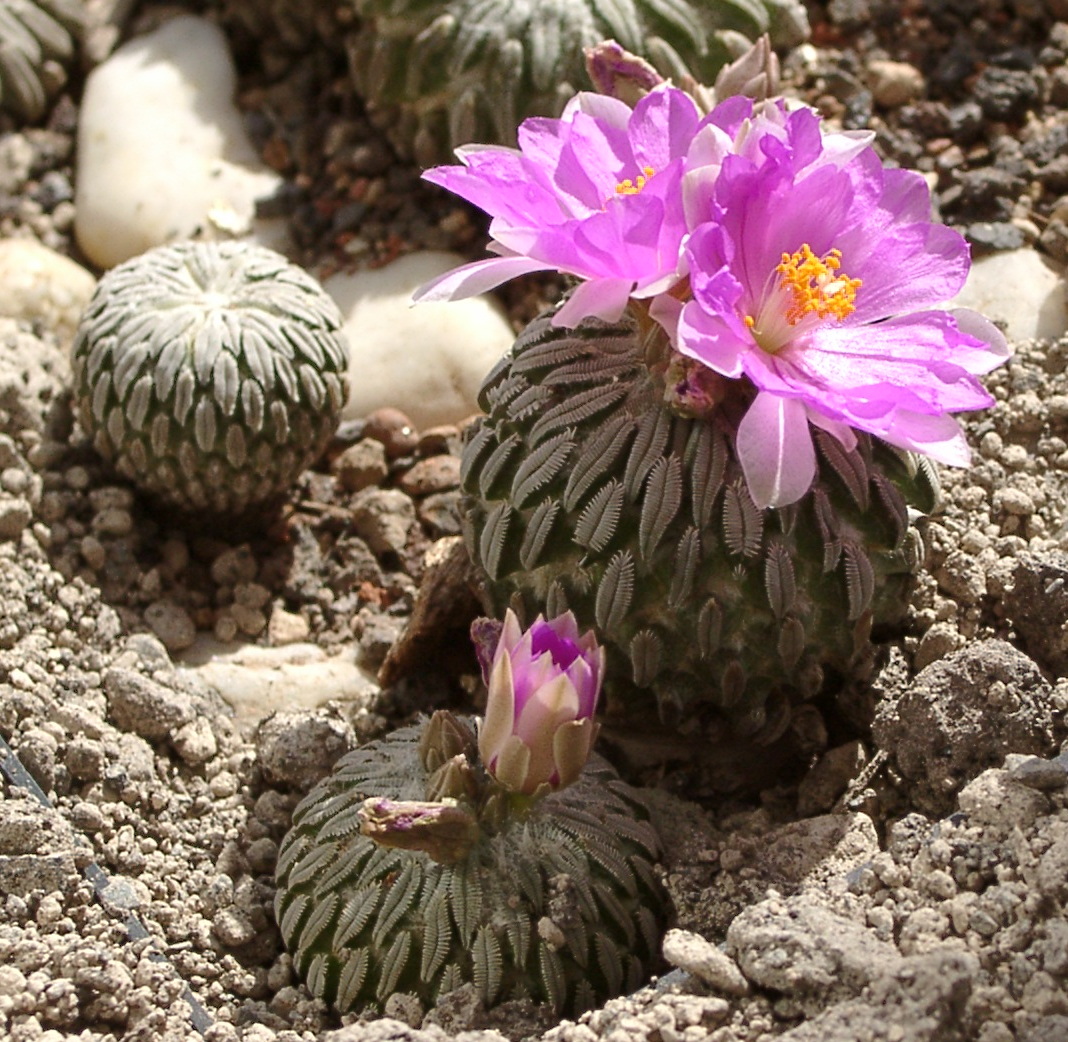
Small, slow-growing Mexican cactus whose tuberculate ribs resemble a woodlouse (whence "aselliformis"). Contains low concentrations of mescaline and other phenethylamines. Sometimes called peyotillo and used by some Huichol bands as an addition to or substitute for true peyote.
ECOLOGY & HABITAT
Limestone gravels of the southern Chihuahuan Desert. Tiny, half-buried in habitat — easily overlooked.
Distribution
Mexico (San Luis Potosí)
INDIGENOUS NAMES
The names this organism has been given by the cultures that have lived alongside it. Each carries an entire relationship — what is sacred is never simply translated.
- peyotilloSpanish (Mexico)"little peyote"
TRADITIONAL USE
- Occasional Huichol use as a peyote analogue or admixture
REFERENCES
Toggle scholarly mode in the footer for inline DOI links
- Anderson 1980


