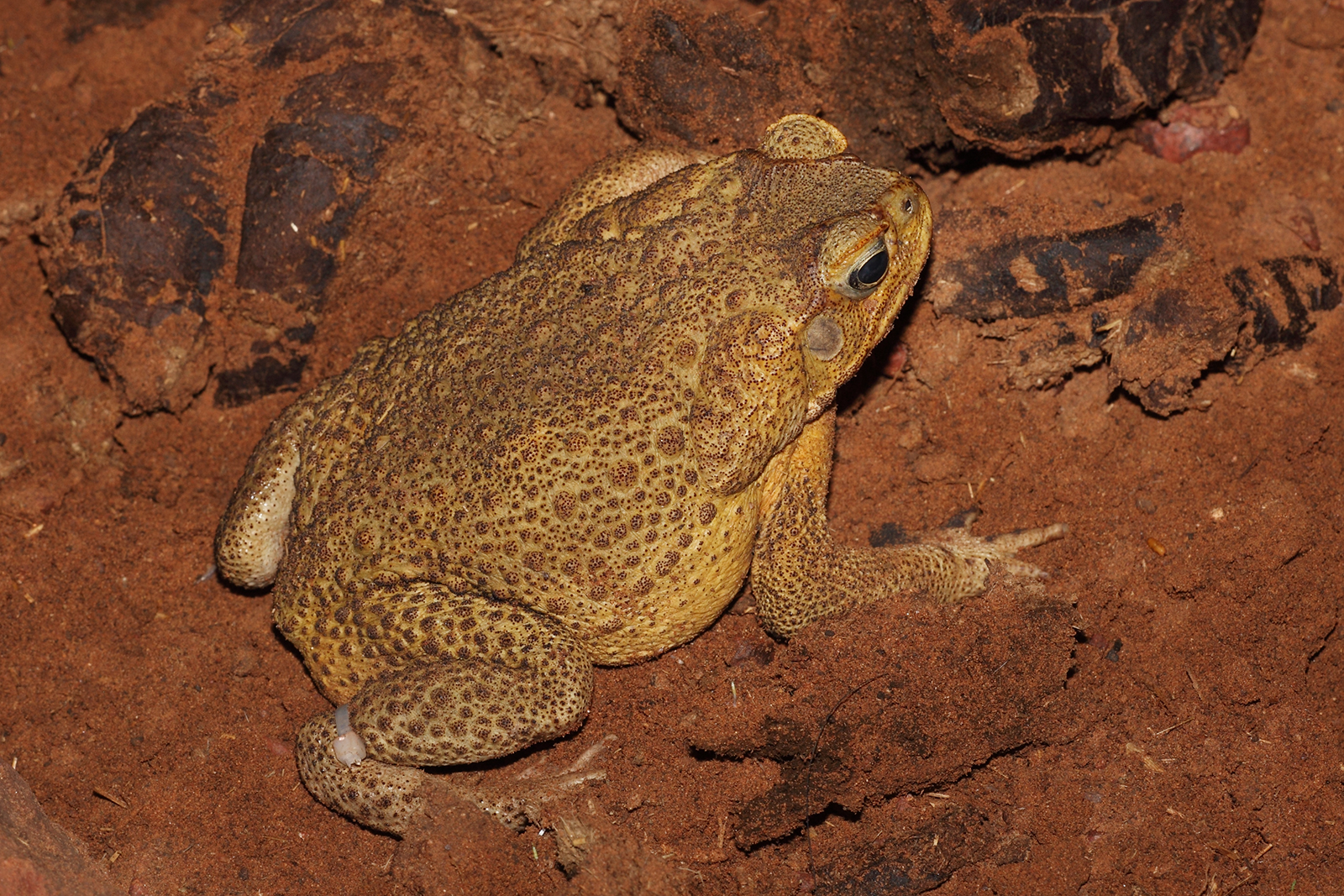
Very large bufonid toad native to Central and South America, infamous worldwide as one of the most damaging invasive species after deliberate introduction to Australia, the Caribbean and many Pacific islands. The parotoid glands secrete a complex toxin cocktail including bufotenine, bufotalin, and cardiac glycosides.
Highly adaptable opportunist thriving in disturbed and human-modified habitats; nocturnal, terrestrial, eats almost anything it can swallow. Predators that try to eat the adult toad are frequently killed by the cardiac glycoside fraction of the parotoid secretion.
- Sporadic Mesoamerican folk medicinal mention
- Modern recreational use of secretions is rare, distinct from and far more dangerous than Incilius alvarius
Often confused with Incilius alvarius in popular discussion of "toad medicine" — but R. marina's secretion is dominated by cardiac glycosides rather than the relatively clean 5-MeO-DMT profile of the Sonoran species. Smoking dried R. marina secretion is genuinely dangerous and should not be conflated with Sonoran toad practice.
- Daly 2004
- Lever 2001 — The Cane Toad


