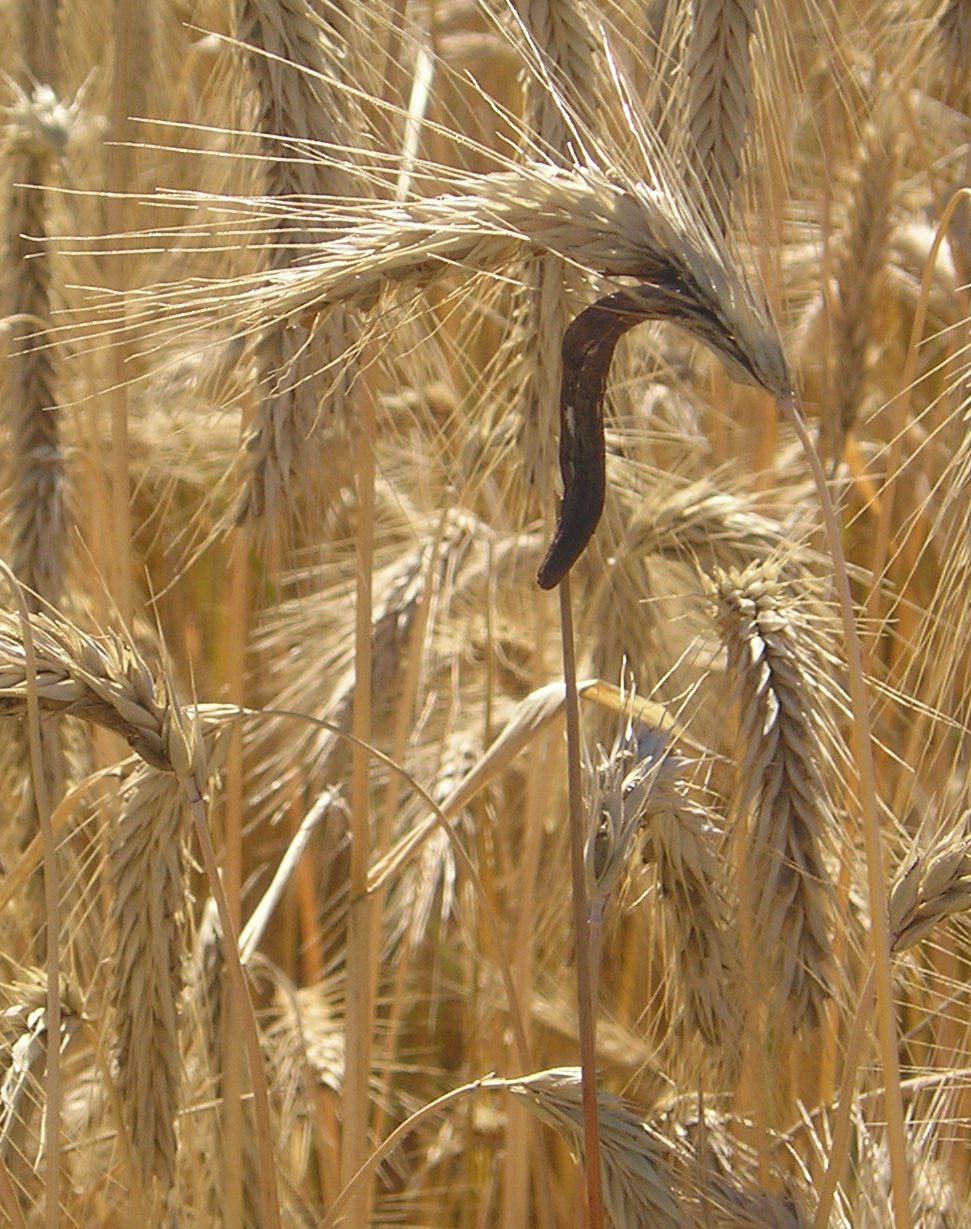
Parasitic fungus of grasses and cereals that replaces the seed with a dark, banana-shaped sclerotium packed with a complex pharmacopeia of ergoline alkaloids — the chemical lineage from which LSD itself was eventually derived.
ECOLOGY & HABITAT
Infects rye, wheat, barley, and wild grasses, especially in cool, wet flowering seasons.
Distribution
EuropeNorth AmericaAsiaAfricaAustralia
TRADITIONAL USE
- Medieval midwifery (controlling postpartum bleeding)
- Plausibly involved in the Eleusinian Mysteries via the kykeon
CULTURAL CONTEXT
Ergot poisoning ('St Anthony's Fire') periodically devastated medieval Europe and is hypothesized to have played a role in episodes attributed to witchcraft. Albert Hofmann's research on ergot alkaloids at Sandoz led to the synthesis of LSD in 1938.
SEASONAL WINDOW
J
F
M
A
M
J
J
A
S
O
N
D
Sclerotia mature on flowering grasses in summer
GALLERY
3 images
REFERENCES
Toggle scholarly mode in the footer for inline DOI links
- Hofmann 1979
- Wasson, Hofmann & Ruck 1978


