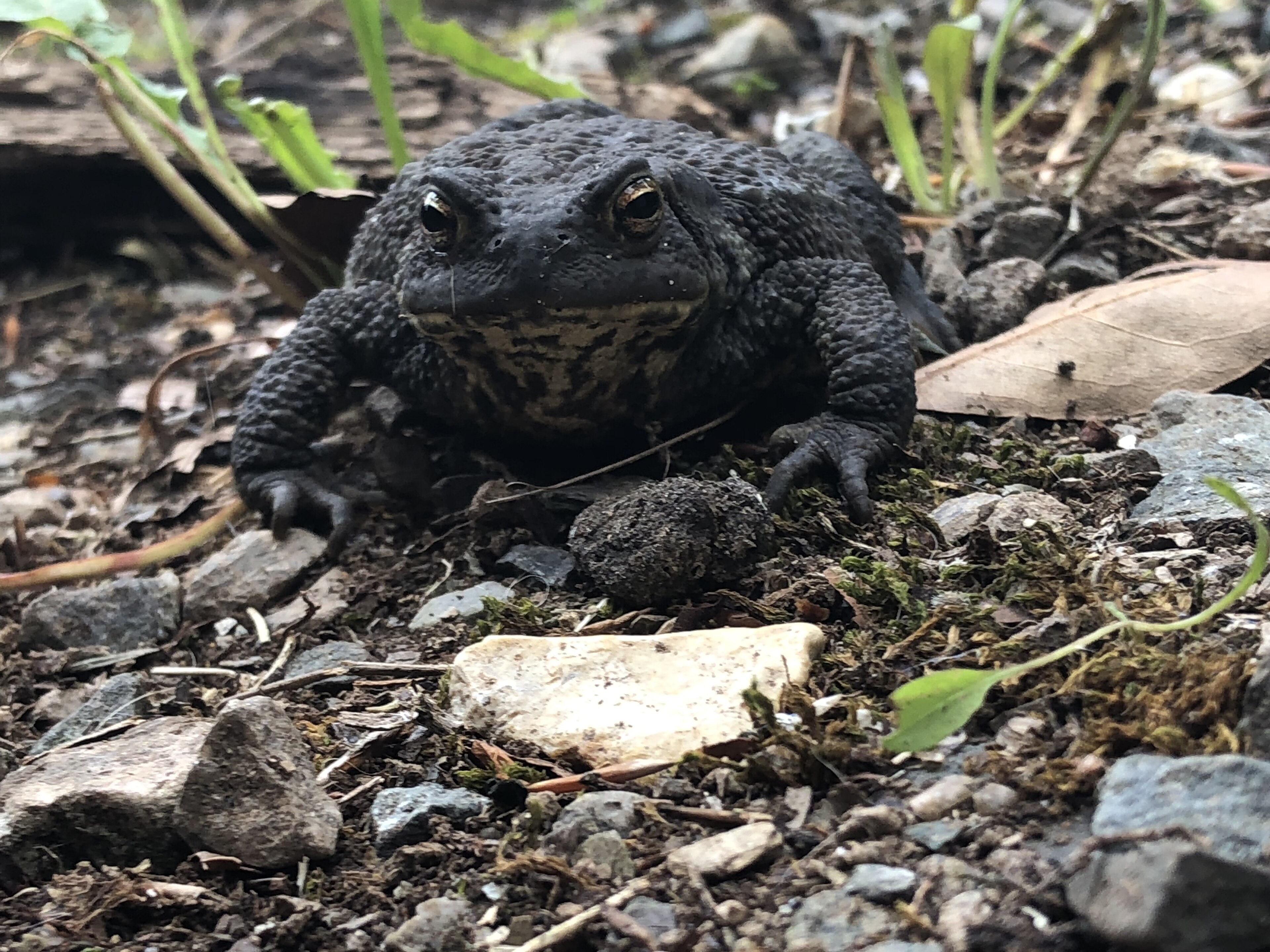
Widespread Eurasian toad whose parotoid secretion contains bufotenine, bufotalin, and other bufadienolides at lower concentration than Rhinella marina. Of more historical and cultural than pharmacological interest — repeatedly named in early-modern European witch-trial confessions and herbals as an ingredient in flying ointments and brews.
Terrestrial, nocturnal, breeds in still water in spring. Distributed across most of Europe, Western Asia, and parts of Northwest Africa. Long-lived (10–20 years in the wild).
- Named ingredient in early-modern European witchcraft formulae and supposed flying ointments
- Folk herbalism across medieval Europe
The historical association of toads with witchcraft and altered states has more cultural staying-power than pharmacological basis — secreted bufotenine in the common toad does not appear at concentrations producing meaningful psychoactive effects when used topically. Included as a record of how the toad-as-entheogen idea entered the Western imagination centuries before the Sonoran-toad rediscovery.
- Wasson 1968
- Müller-Ebeling 1998


