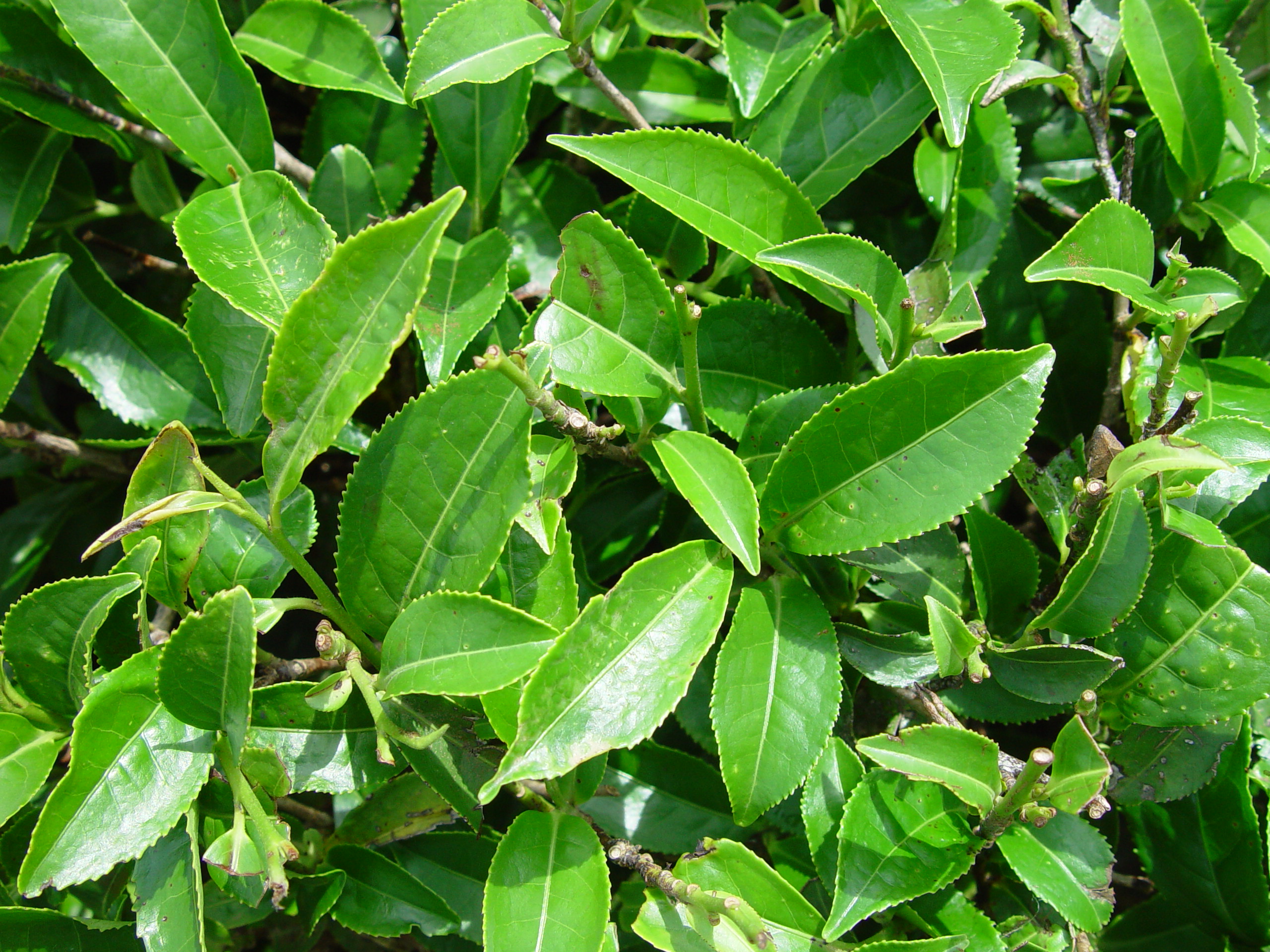
East Asian evergreen shrub whose leaves, processed in dozens of distinct ways, yield green, white, oolong, black, and pu-erh teas — the second most consumed beverage on Earth and the second great gift of caffeine to human culture.
ECOLOGY & HABITAT
Cool subtropical highland shrub of monsoon Asia, cultivated worldwide.
Distribution
China (origin)IndiaJapanSri LankaKenyaand worldwide cultivation
INDIGENOUS NAMES
The names this organism has been given by the cultures that have lived alongside it. Each carries an entire relationship — what is sacred is never simply translated.
- Chá (茶)Mandarin
- O-cha (お茶)Japanese
- ChaiHindi / Persian
TRADITIONAL USE
- Central to Chinese, Japanese, and other East Asian ceremonial and contemplative traditions
- Foundational beverage of the British Empire's economic system
CULTURAL CONTEXT
Tea's unique combination of caffeine and L-theanine produces a famously different kind of alertness from coffee — softer, more sustained, less anxious. The Japanese tea ceremony (chanoyu) makes this pharmacology into an entire aesthetic discipline.
GALLERY
3 images
REFERENCES
Toggle scholarly mode in the footer for inline DOI links
- Mair & Hoh 2009
- Heiss & Heiss 2007


