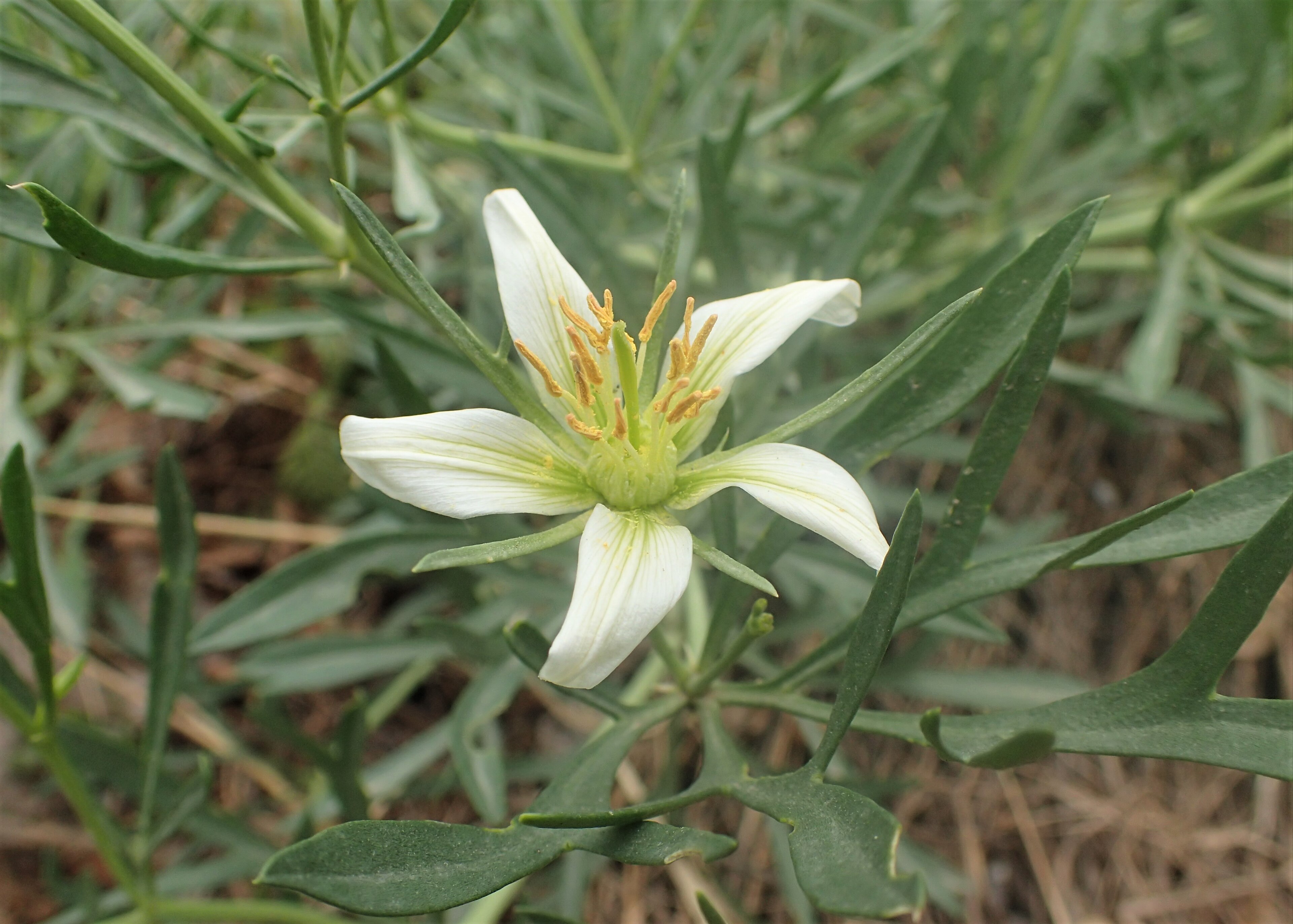
Hardy Old-World shrub whose seeds are extraordinarily rich in the beta-carboline alkaloids harmine, harmaline, and tetrahydroharmine — the same MAO-inhibiting chemistry as Banisteriopsis caapi, making it the cornerstone of so-called 'ayahuasca analogs'.
Drought-tolerant perennial of semi-arid steppe and saline soils across Iran, Central Asia, and the Mediterranean.
The names this organism has been given by the cultures that have lived alongside it. Each carries an entire relationship — what is sacred is never simply translated.
- EsfandPersian · Iranian and Central Asian
- HarmalArabic
- IspandPashto · Pashtun
- Burned as protective incense (esfand) in Iranian and Central Asian folk practice
- Used medicinally in Unani and Persian traditional medicine
Some scholars (notably David Flattery and Martin Schwartz) have argued that Syrian rue is the legendary haoma / soma of the Avesta and Rigveda, though the identification remains contested.
- Flattery & Schwartz 1989
- Frison et al. 2008 DOI


