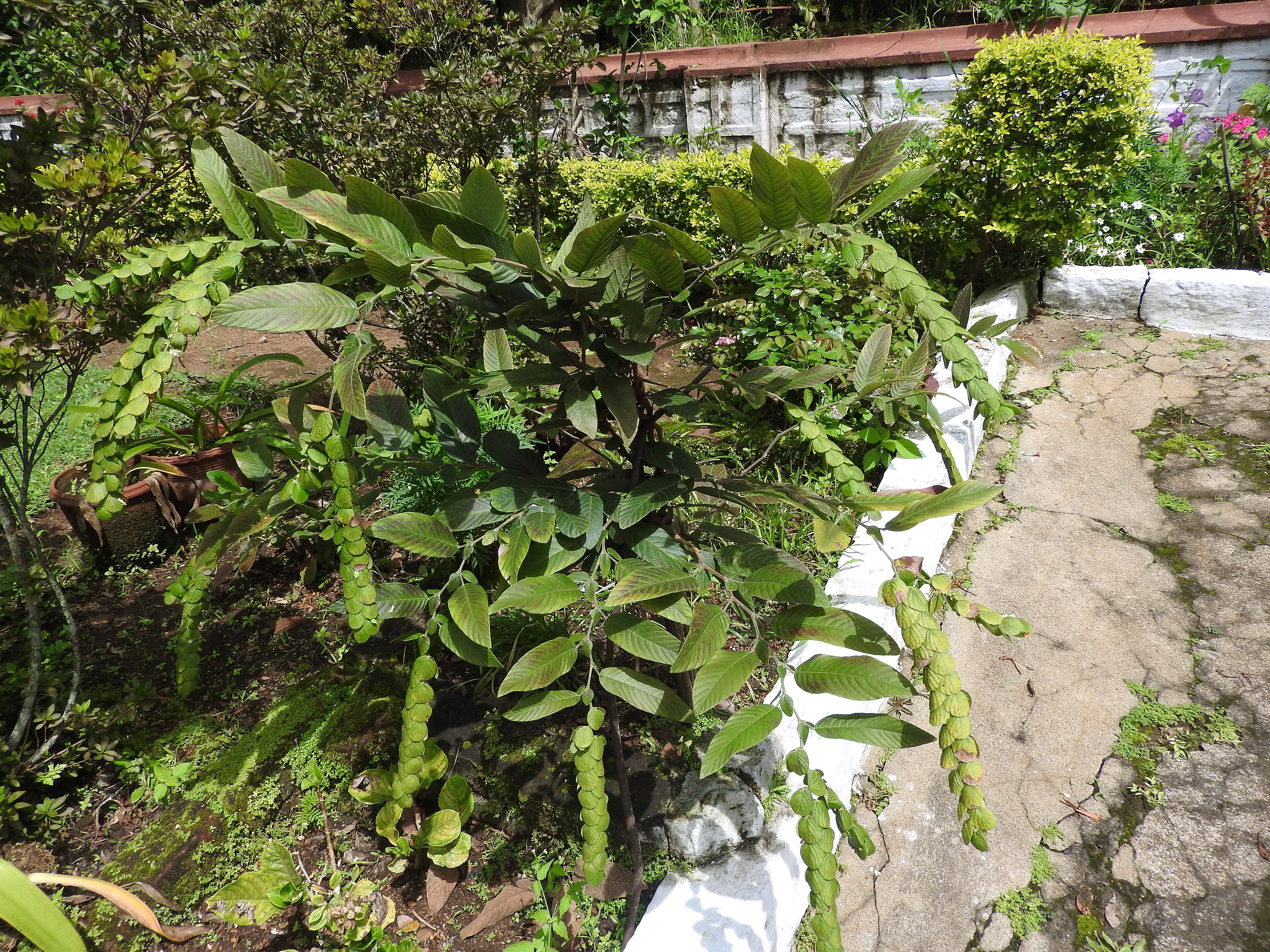
Small flowering shrub of the legume family, native to a broad sweep of tropical and subtropical Asia. Phytochemical surveys have repeatedly shown its leaves and roots to contain a striking combination of psychoactive tryptamines — N,N-DMT, 5-MeO-DMT, and bufotenine — alongside β-carboline alkaloids of the harmala family, making it one of the very few single plants to carry both halves of the ayahuasca formula in the same organism.
Open scrub, secondary forest margins, roadsides, and grassland of monsoonal Asia. Grows readily on disturbed ground from sea level to mid-elevations across its range.
- Folk-medicinal use across South and Southeast Asia for fever, dysentery, and general tonic preparations
- Documented ethnobotanical use in Thai and Chinese traditional medicine — the entheogenic potential is a comparatively recent Western recognition rather than an established ceremonial tradition
Phytochemically remarkable: a single plant carrying both DMT-class tryptamines and harmala β-carbolines in the same tissue. This profile means an oral preparation in principle does not require the two-plant pairing on which ayahuasca relies — though documented traditional psychoactive use of Phyllodium specifically appears to be sparse, and most awareness of its alkaloid profile comes from modern phytochemical analysis.
- Ghosal 1972
- Trout 2007 — Some Simple Tryptamines


