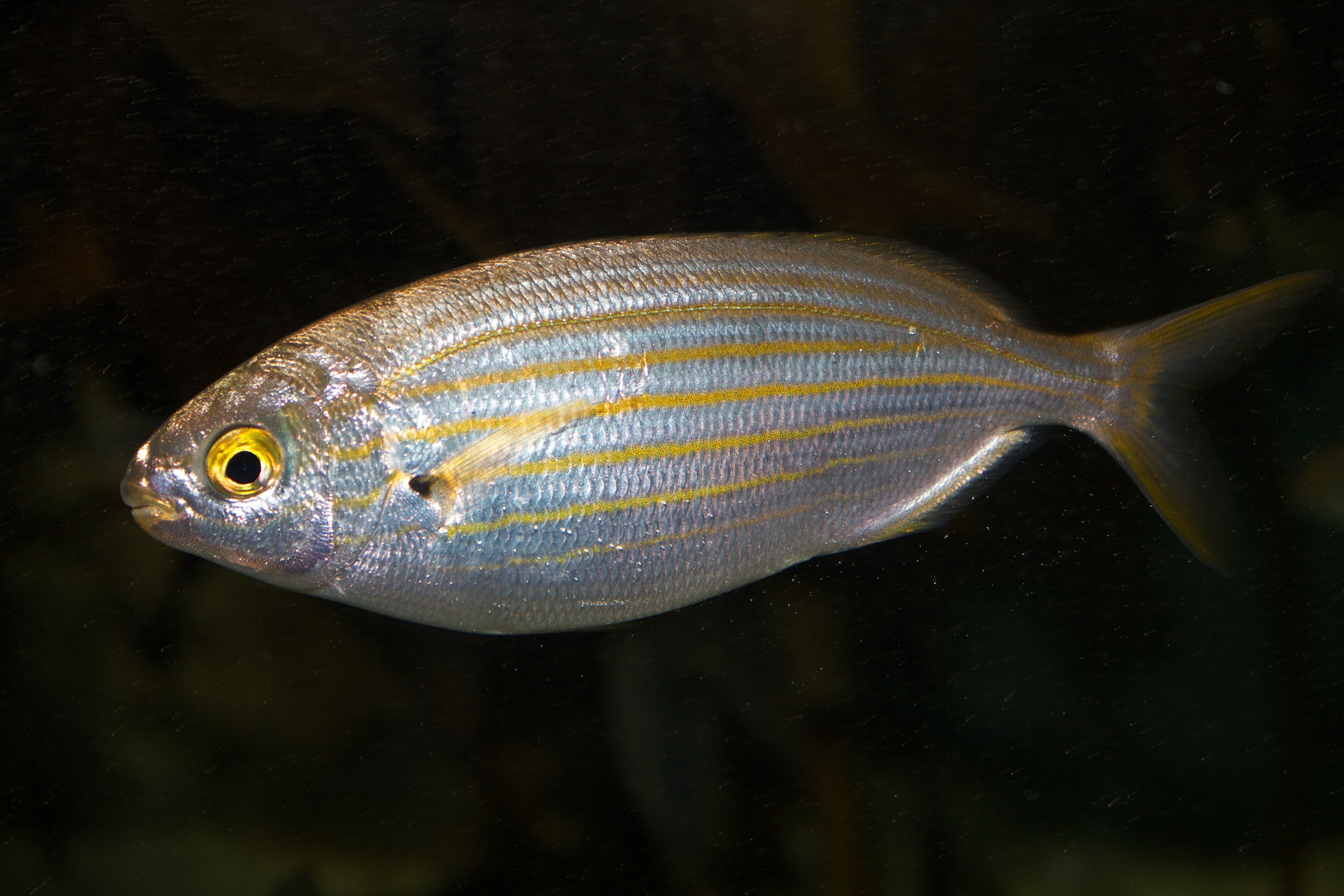
Mediterranean and East Atlantic seabream that, when its head or viscera are eaten under certain conditions, can produce 'ichthyoallyeinotoxism' — vivid auditory and visual hallucinations lasting up to 36 hours, almost certainly caused by algal toxins it accumulates rather than by anything the fish itself synthesizes.
ECOLOGY & HABITAT
Schooling coastal fish of seagrass beds and shallow rocky reefs in the Mediterranean and eastern Atlantic.
Distribution
Mediterranean SeaEast Atlantic (Bay of Biscay to South Africa)
TRADITIONAL USE
- Reputedly eaten as a recreational hallucinogen in the Roman Empire
CULTURAL CONTEXT
Documented in modern medical literature in two well-known French Mediterranean cases (de Haro & Pommier 2006). The active compounds are thought to be algal indole derivatives passed up the food chain.
REFERENCES
Toggle scholarly mode in the footer for inline DOI links
- de Haro & Pommier 2006 DOI
- Halstead 1988


