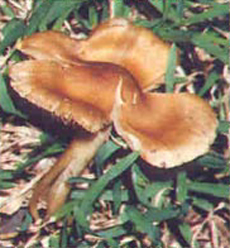
Small European fibrecap that, uniquely within an otherwise toxic genus, produces psilocybin, baeocystin, and the quaternary tryptamine aeruginascin — the latter discovered through accidental poisonings.
ECOLOGY & HABITAT
Forms ectomycorrhizal associations with poplar, willow, and other deciduous trees in sandy soils.
Distribution
GermanyHungarySlovakiaCzech RepublicPoland
TRADITIONAL USE
- No traditional use
CULTURAL CONTEXT
Most other Inocybe species contain dangerous muscarine; this one is a striking chemical outlier and a cautionary tale for identification.
SEASONAL WINDOW
J
F
M
A
M
J
J
A
S
O
N
D
Late spring through early autumn
GALLERY
2 images
REFERENCES
Toggle scholarly mode in the footer for inline DOI links
- Gartz 1986
- Jensen et al. 2006 DOI


