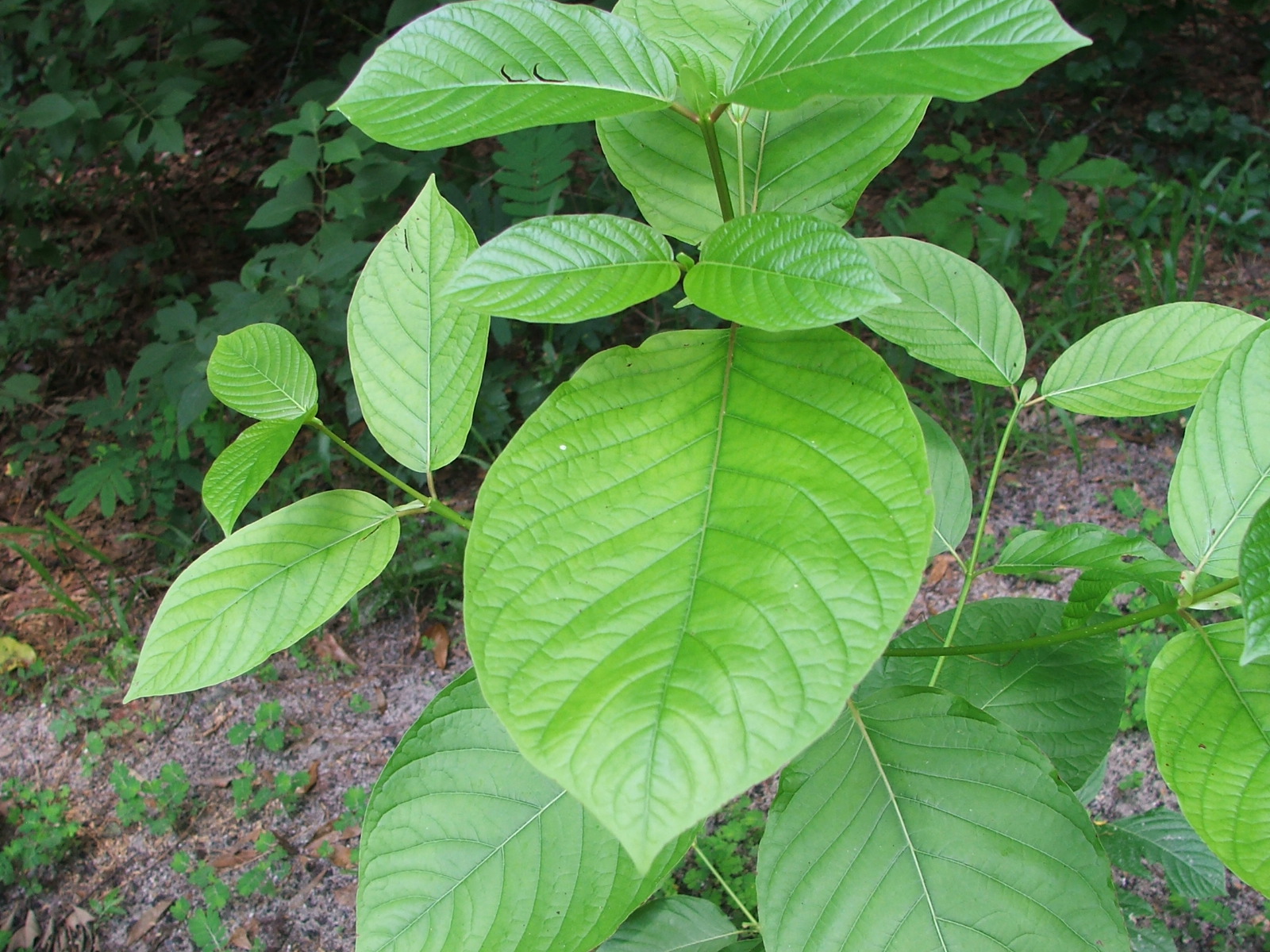
Tropical tree of Southeast Asia whose leaves contain mitragynine and 7-hydroxymitragynine — alkaloids with unusual pharmacology spanning opioid agonism and adrenergic modulation. Stimulating at low doses, sedating and analgesic at higher doses.
Wet evergreen rainforest tree, growing to 25 metres in undisturbed forest. Indigenous to Thailand, Malaysia, Indonesia, and parts of Borneo.
The names this organism has been given by the cultures that have lived alongside it. Each carries an entire relationship — what is sacred is never simply translated.
- KratomThai
- BiakMalay
- KetumMalay
- Centuries of use among Southeast Asian laborers and rural communities — chewed fresh, brewed as tea, or made into pastes for energy, pain relief, and as a substitute for opium during shortages
Kratom occupies a contested legal grey zone: prohibited in some countries (including its native Thailand for decades), unregulated in others. Modern Western interest centers on its potential as a tool for managing opioid withdrawal.


