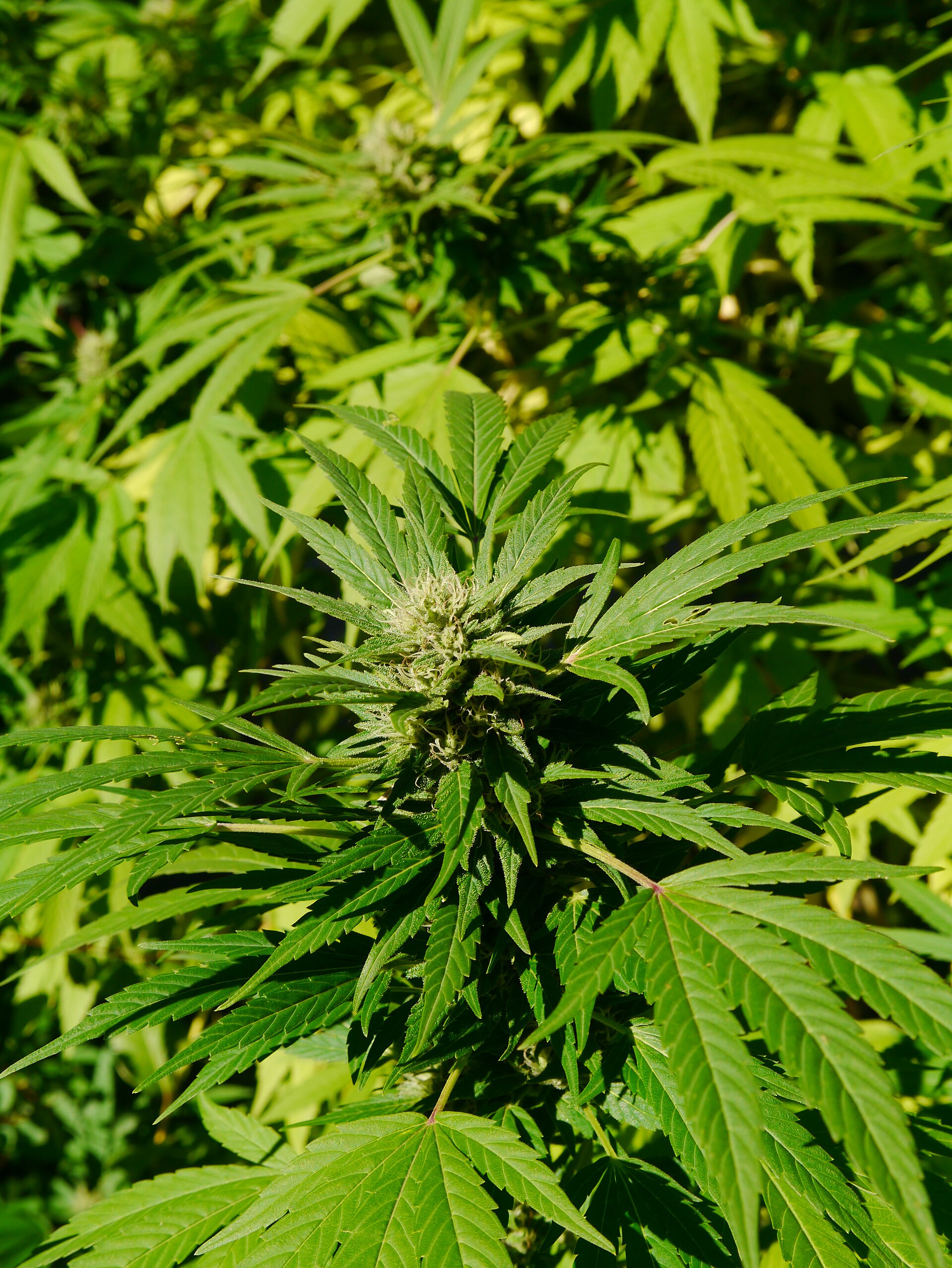
Annual flowering plant whose resinous female inflorescences produce dozens of cannabinoids — chiefly Δ9-THC and CBD. One of humanity's oldest cultivated plants, with archaeological evidence of use stretching back at least five thousand years.
Wind-pollinated, photoperiod-sensitive annual. Native to Central Asia but cultivated worldwide; thrives across a wide range of climates.
The names this organism has been given by the cultures that have lived alongside it. Each carries an entire relationship — what is sacred is never simply translated.
- BhangHindi / Sanskrit · Indian subcontinent
- GanjaSanskrit
- KifArabic · North African
- DaggaKhoekhoegowab · Khoekhoe and Bantu peoples of southern Africa
- Used for at least 2500 years in Indian Ayurveda, Chinese medicine, and Scythian funerary rites; deep ritual significance in Rastafari and in many Sufi traditions
The split between sativa, indica, and ruderalis is contested in modern taxonomy — most botanists now treat the genus as a single species with many varieties. The plant's status today varies from sacrament to medicine to commodity to controlled substance depending on jurisdiction.
Outdoor harvest in temperate latitudes follows late-summer flowering
- Mechoulam 1964 DOI
- Russo 2007 DOI
- Modern cannabinoid research


